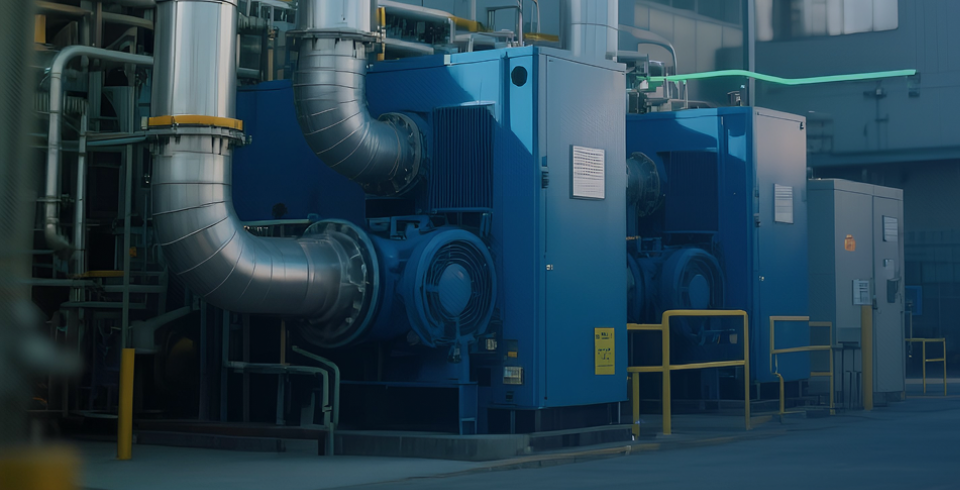
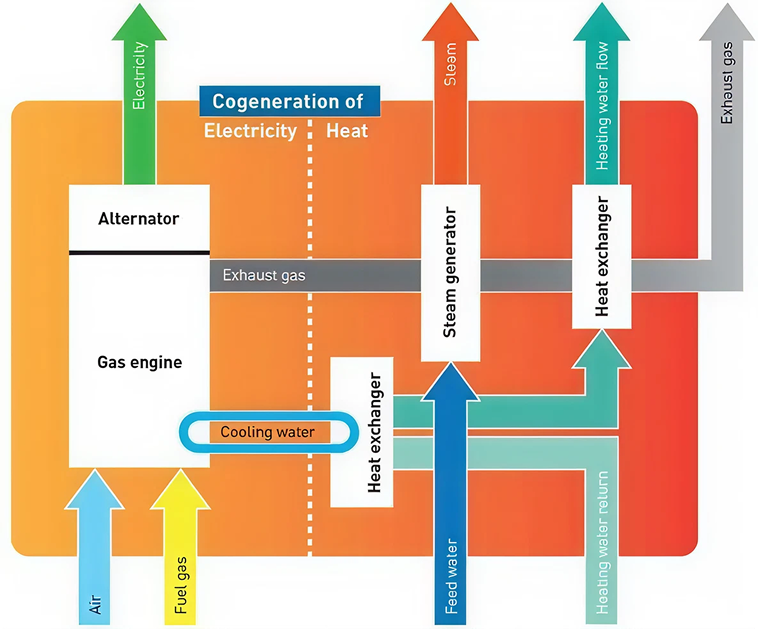
Cogeneration is a highly efficient method of energy production that generates both electricity and heat within a single system. This enables more effective utilization of energy resources and makes use of waste heat, allowing more work to be done with less energy.
Cogeneration systems typically operate using thermal engines such as engines, gas turbines, or steam turbines. These engines convert the chemical energy of fuel (natural gas, biomass, coal, etc.) into mechanical energy. The mechanical energy is then transformed into electricity via a generator. Simultaneously, the heat energy released during the engine’s operation is made useful. This heat can be utilized for various purposes, such as heating buildings, producing hot water, or meeting process heat requirements.
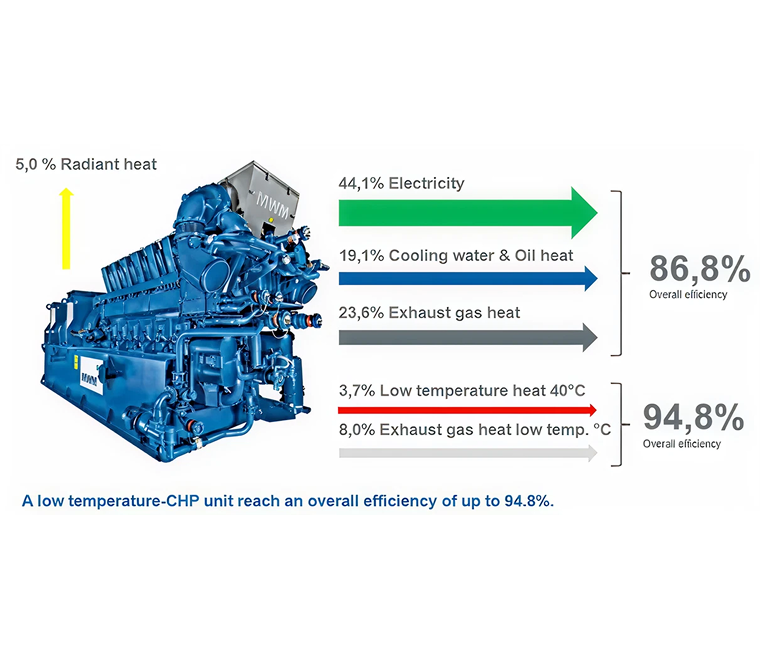
Cogeneration systems offer many significant benefits. Some of these include:
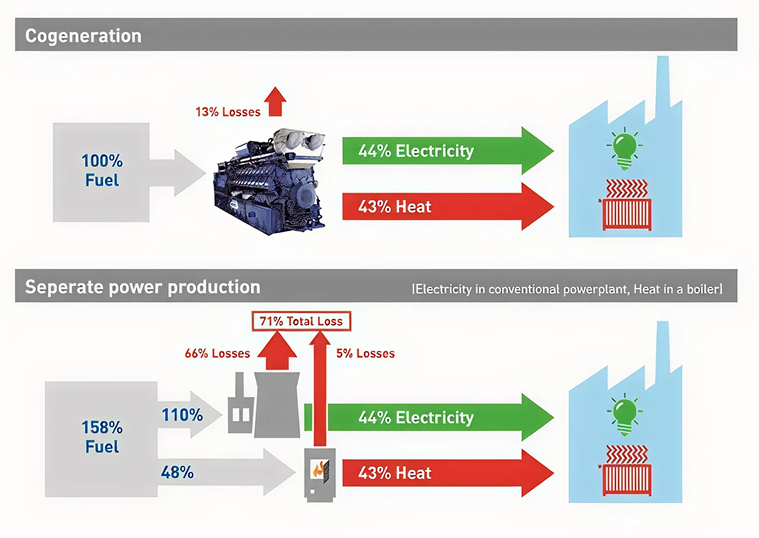
- Energy Savings: Cogeneration systems can provide up to 30-40% more energy savings compared to traditional energy production methods. This is because they make use of waste heat, turning energy that would normally be released into the atmosphere into usable energy.
- Cost Savings: Due to energy savings, you can significantly reduce your electricity and heating bills. Additionally, cogeneration systems require less maintenance and repair, which provides further savings in the long run.
- Environmentally Friendly: Cogeneration systems help protect the environment by producing fewer greenhouse gas emissions. This way, you do not contribute to environmental problems like global warming and air pollution.
- Reliability: Cogeneration systems can operate independently of the electricity grid, providing greater security against power outages.
- Flexibility: Cogeneration systems can be customized to meet different needs. Therefore, they can be used for small and medium-sized enterprises as well as large industrial facilities.
Cogeneration systems are ideal for businesses that want to save energy, reduce costs, and protect the environment. They are particularly beneficial for businesses with high heat requirements.
- Hospitals
- Hotels
- Shopping centers
- Universities
- Residential complexes
- Greenhouse gas production facilities
- Food processing plants
- Textile factories
For more information on the installation and operation of cogeneration systems, please contact our experts.
Energy engineered for every industry. Iltekno delivers customized, efficient, and reliable power solutions
designed to meet sector-specific challenges across industrial, commercial, and utility-scale environments.
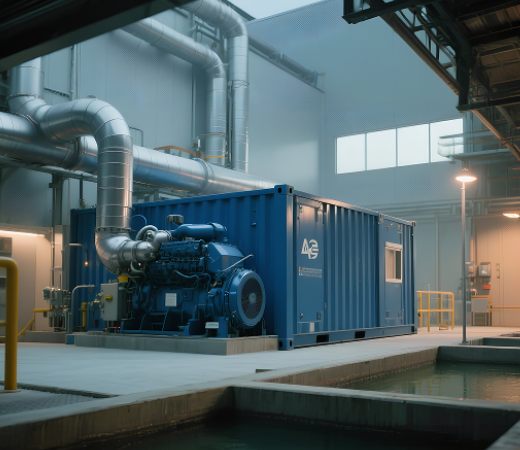
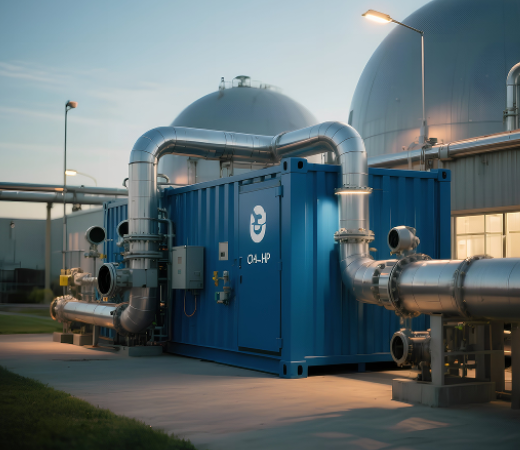
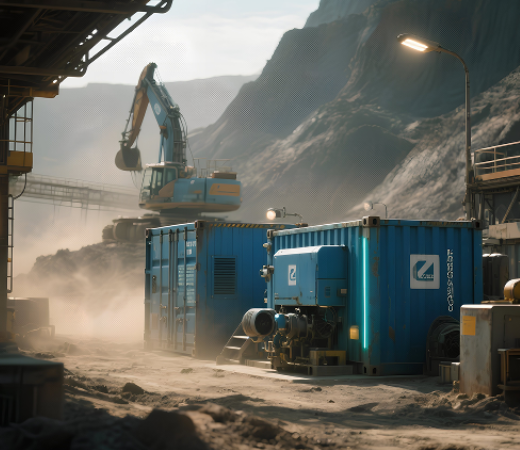
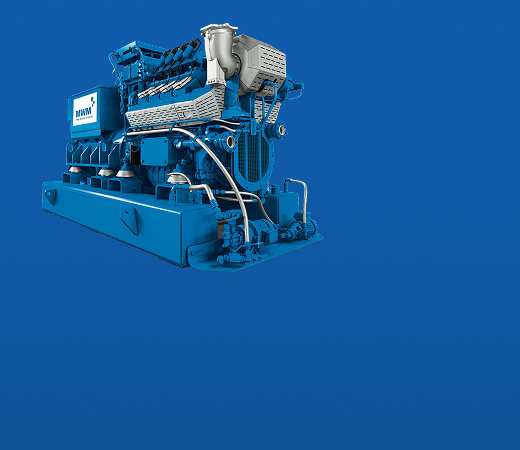
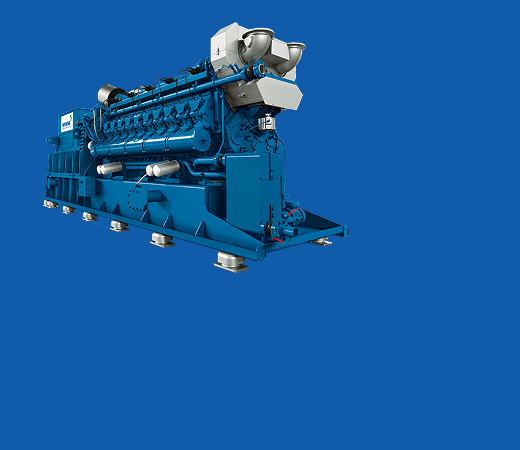
The gas engines can be operated with various types of gas, such as natural gas, shale gas, mine gas, biogas,
landfill gas, sewage gas, and syngas. They are designed for maximum electrical and thermal efficiency.
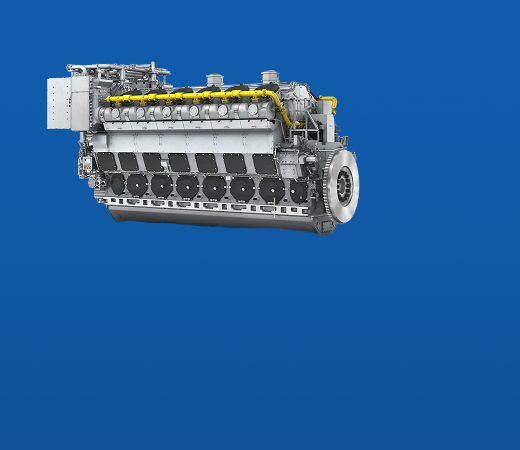



Latest project updates, engineering insights, and industry news from Iltekno — showcasing our global energy
solutions, technological innovations, and the success stories behind the power plants we deliver around the world.
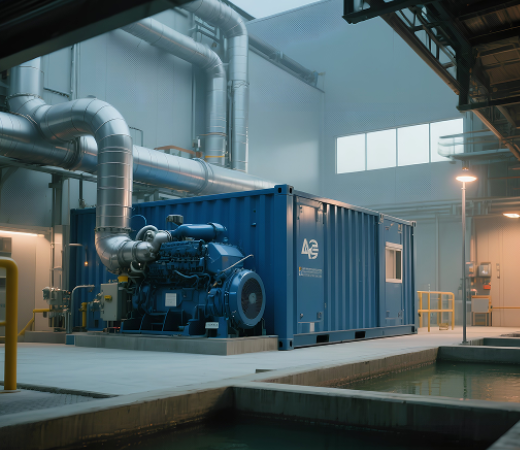

We deliver proven, efficient and customizable technologies—from gas engines and solar-hybrid systems to
automation and advanced control platforms—helping businesses operate cleaner, smarter and more efficiently.
Frequently Asked Questions?
Latest project updates, engineering insights, and industry news from Iltekno — showcasing our global energy
solutions, technological innovations, and the success stories behind the power plants we deliver around the world.
Cogeneration: A method of energy production that generates both electricity and heat within a single system.
Cogeneration System: A system that performs the cogeneration process.
Primary Energy Source: The fuel used in a cogeneration system (natural gas, biomass, coal, etc.).
Thermal Engine: An engine that converts the chemical energy of fuel into mechanical energy.
Generator: A device that converts mechanical energy into electricity.
Heat Recovery System: A system that makes waste heat from the thermal engine useful.
Heating: The process of meeting the heat requirements of buildings and processes.
Cooling: The process of meeting the cooling requirements of buildings and processes.
Efficiency: A measure of how effectively a system converts input into output.
Greenhouse Gas Emission: The release of gases into the atmosphere that cause climate change.
Energy Savings: Doing the same work using less energy.
Cost Savings: Saving money through energy savings.
Return on Investment (ROI): The profit gained from an investment.
Payback Period: The time it takes to recover the cost of an investment.
Government Incentives: Incentives provided by the government to businesses that invest in cogeneration systems.
The journey that began with the brand Benz&Cie, founded by Carl Benz in 1871 and later known as MWM, gained momentum with the production of the first automobile powered by an internal combustion engine in 1886. The mass production of two-stroke diesel engines in the 1910s and subsequent developments laid the foundation for today's advanced cogeneration systems.
Cogeneration systems first emerged during the Industrial Revolution in the 19th century. The initial cogeneration systems were used in factories to produce electricity and heat with steam engines. These systems quickly gained popularity due to their higher efficiency compared to traditional energy production methods.
In the 20th century, there were technological advancements in cogeneration systems. New engines, such as gas turbines and diesel engines, were developed and began to be used in cogeneration systems. These advancements made cogeneration systems even more efficient and economical.
In the 21st century, interest in cogeneration systems has increased. The main reasons for this are:
- Rising Energy Prices: The increase in energy prices has led businesses to seek more efficient energy production methods. Cogeneration systems help businesses reduce costs by saving energy.
- Environmental Concerns: Environmental problems like the increase in greenhouse gas emissions and air pollution encourage businesses to use more environmentally friendly energy production methods. Cogeneration systems produce fewer greenhouse gas emissions compared to traditional energy production methods, making them more environmentally friendly.
- Technological Advancements: Technological advancements have made cogeneration systems more efficient and economical. By using new materials and production techniques, the cost of cogeneration systems has been reduced and their efficiency increased.
Today, cogeneration systems are used in many different sectors. The most common applications are:
- Hospitals: Hospitals are facilities with high electricity and heat needs. Cogeneration systems can help hospitals reduce energy costs and become more environmentally friendly.
- Hotels: Hotels also have high electricity and heat needs. Cogeneration systems can help hotels reduce energy costs and provide a more comfortable accommodation experience.
- Shopping Centers: Shopping centers have high electricity and heat needs. Cogeneration systems can help shopping centers reduce energy costs and provide a more comfortable shopping experience.
- Universities: Universities have various facilities, such as research laboratories and dormitories. Cogeneration systems can help universities reduce energy costs and create a more sustainable campus environment.
- Residential Complexes: Residential complexes have high electricity and heat needs. Cogeneration systems can help residential complexes reduce energy costs and provide a more comfortable living environment for residents.
- Greenhouse Gas Production Facilities: These facilities produce large amounts of heat and electricity. Cogeneration systems can help reduce energy costs and make waste heat useful.
- Food Processing Plants: Food processing plants use heat and electricity in their production processes. Cogeneration systems can help these plants reduce energy costs and optimize their production processes.
- Textile Factories: Textile factories use heat and electricity in their production processes. Cogeneration systems can help these factories reduce energy costs and optimize their production processes.
Cogeneration systems are an ideal solution for businesses that want to save energy, reduce costs, and protect the environment. They are especially beneficial for businesses with high heat needs.